

- K-Drama breaks down borders with deeply Korean stories capable of connecting with universal emotions
- YouTube asserts its role in the audiovisual industry: “We learned that virality builds culture”
- Mexico showcases incentives, infrastructure and talent to strengthen its position as a destination for international productions
Iberseries & Platino Industria has kicked off the activities of its sixth edition by focusing on an increasingly interconnected audiovisual industry, in which local identity, new ways of reaching audiences, co-production and alliances between territories are becoming tools for boosting the international circulation of stories.
The first day of the leading industry event for the Ibero-American audiovisual sector showcased the ability of content deeply rooted in its places of origin to cross borders, from the international phenomenon of K-Drama to Amazon MGM Studios’ commitment to local productions with global ambitions. Creators, platforms and analysts, from different perspectives, agreed on the value of authenticity, while new analysis and distribution tools are making it possible to better understand audiences and connect content with viewers across different markets.
YouTube addressed its evolution from virality to becoming an increasingly integrated player in the audiovisual industry, while Mexico, the Country in Focus of this edition, showcased the strengths of its production ecosystem, with incentives, infrastructure, talent and co-production capabilities. The day also examined new financing models, the role of IPs and co-productions, marketing strategies based on viewer intent, and public and private investment as drivers of growth in the sector.
El K-Drama break frontiers
The international expansion of Korean audiovisual content and its ability to connect with viewers from very different cultures were at the heart of the session “En el foco del K-Drama: De Corea al mundo: Hong Jong-chan y el éxito global del contenido coreano”. Director and CEO of Cloud Films Hong Jong-chan discussed the experience of “Teach you a lesson” and the international ambition with which it was conceived: “We actually made it thinking that it was a story that viewers in Spain, which is even farther away from us, or in countries with other languages, could also identify with.”
This connection became apparent after its release, when it prompted two contrasting responses: “One was whether things like this really happened in South Korea, and there was another completely opposite reaction, saying that things are similar in other countries too, so I realised that problems in the education system are also serious elsewhere.” For Hong Jong-chan, this identification can also be explained by the fact that the conflict presented in the series goes beyond the strictly educational sphere to address issues affecting society as a whole.
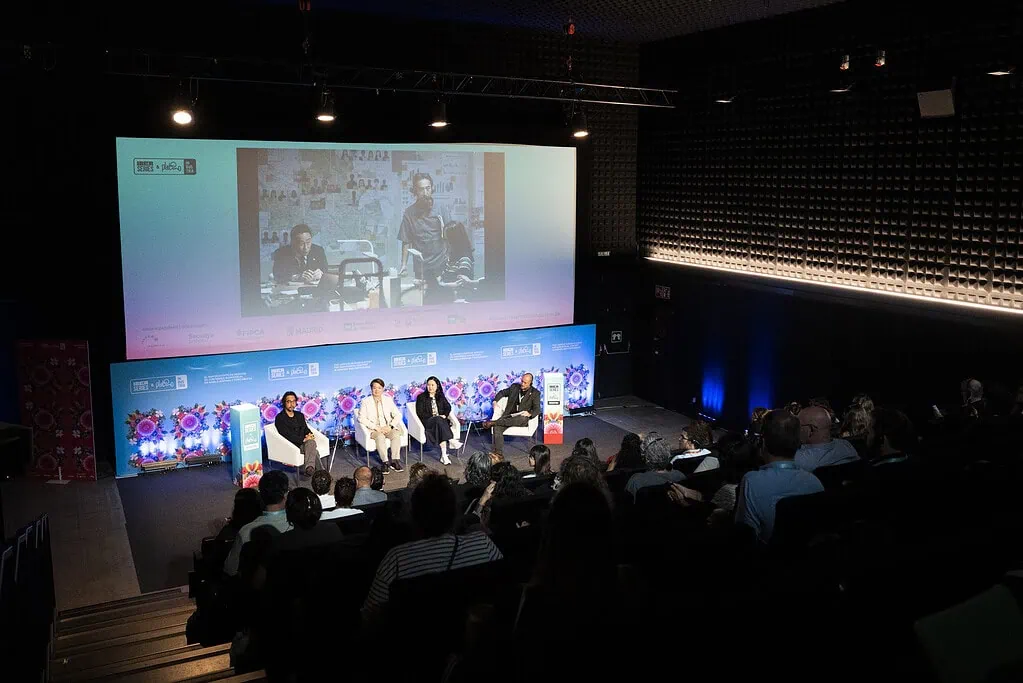
Hojin Kwon, Senior Executive Director of the Korean Association for Broadcasting & Telecommunication, put into perspective the extraordinary international journey experienced by South Korean fiction over recent decades. “I have been working for 35 years to introduce Korean content abroad, but 10 years ago I would never have imagined that I would have the opportunity to speak to you about Korean content on this stage.”
For Kwon, the key to this transformation lies in stories’ ability to resonate beyond borders: “No matter how far away a country may be, the most important thing is for that story to have something that resonates with viewers around the world.” As an example, he recalled his own experience with Lee Jang-Soo’s drama series “Escalera al cielo”, which he distributed in South America around 25 years ago, “and it is still broadcast there and remains extremely popular, which shows just how far stories can travel, even between distant countries.”
KOCCA Director Miyoung Byoun likewise highlighted this balance between cultural distinctiveness and universality as one of the driving forces behind the international circulation of content. “I believe that any country can create unique productions with content that fits the characteristics of a particular culture.”
YouTube, from viral to industry
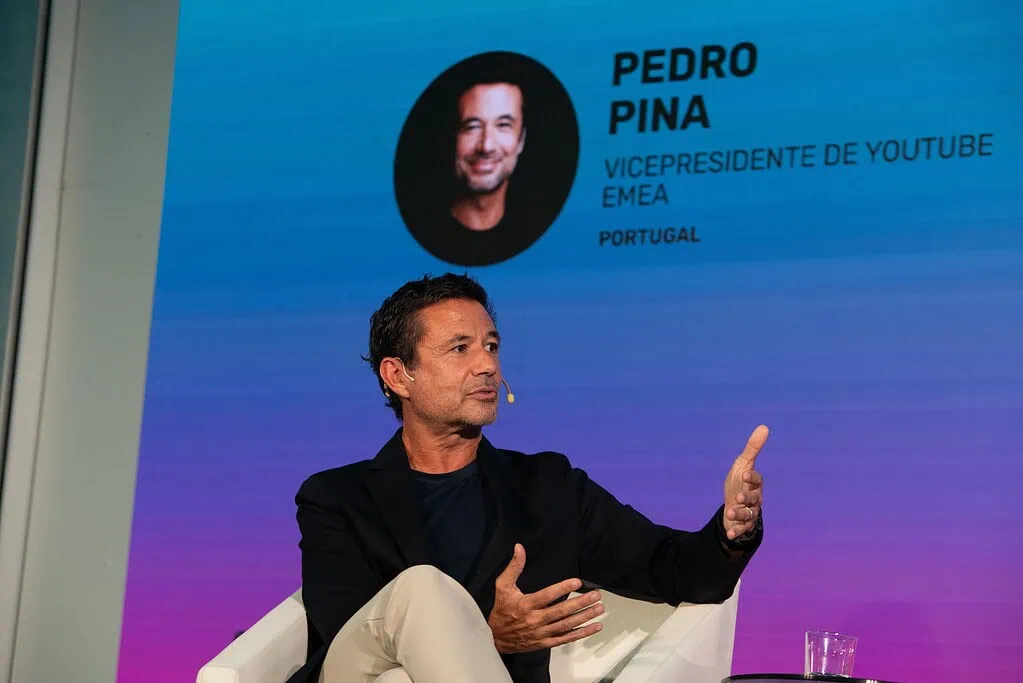
YouTube is no longer merely the place where a video can go viral; it has become an increasingly integrated part of the audiovisual industry’s strategy. Pedro Pina, Vice President of YouTube EMEA and YouTube
Portugal, reviewed this evolution, from the first global phenomena born on the platform to its current relationship with broadcasters, production companies and distributors, highlighting one of the major lessons learned over the years.
“We learned that virality builds culture,” as well as an ability to generate conversation, communities and shared phenomena which, as he explained, has ultimately transformed the way the industry thinks about the relationship between content and audiences.
But YouTube’s value does not lie solely in its immediate impact, and Pina highlighted the platform’s ability to extend the lifespan of content and bring it before new generations of viewers: “Content lives on YouTube and new content continues to be generated from it,” meaning that catalogues, programmes, films or excerpts from existing productions can find new audiences and generate new exploitation opportunities.
YouTube also makes it possible to turn viewers into fan communities and take content beyond its markets of origin. Pina highlighted this global reach using Korean culture as an example: “Suddenly, something from South Korea, such as ‘Gangnam Style’, was conquering the world thanks to the platform.” At the same time, new formats and creators have turned the platform, in Pina’s words, into “a blank canvas for new creativity,” expanding the possibilities for production, promotion and engagement with viewers.
Following his presentation, the conversation shifted to the industry itself with a panel featuring Rosa Romà, from CCMA; Gianluca Curti, from Minerva Pictures; and Hugo Figueiredo, from RTP. From the perspectives of public broadcasting, production and distribution, the executives discussed the opportunities offered by collaboration between the traditional and digital audiovisual ecosystems: from reaching younger audiences and revitalising catalogues to experimenting with formats and generating new revenue streams.
México, con incentivos, infraestructuras y talento para recibir producciones internacionales
The combination of tax incentives, efficient administrative management, the availability of locations, infrastructure, technology and creative teams with talent and commitment makes Mexico a suitable destination for both domestic and international productions, representatives of the Mexican audiovisual industry agreed during the sixth edition of Iberseries & Platino Industria.
On the first day of the event, held at the Matadero Madrid cultural centre, the panel “México, país en foco, producir en México está chingón. Nuevas condiciones para competir” provided an insight into the context in which, in 2025, 235 feature films, 66 series in production and release stages, and 63 co-productions with 27 countries were made.
“We are at a point where the State is no longer asking itself how to help the audiovisual sector, but rather how the country can be strengthened by promoting the audiovisual industry; Mexico has become more professional, professionals are being trained to work in a coordinated manner, and industry associations are coordinating with one another,” explained Mónica Lozano, CEO of Alebrije Cine y Video.
According to José Miguel Álvarez, Managing Director of EFD Studios, the country has federal legislation in this area, as well as established legislation in Mexico City, which is beginning to be replicated in other states such as Jalisco, Morelos and others, providing incentives for productions “and making it cheaper to produce” compared with other locations. “That also makes it an attractive country for world cinema.”


Guillermo Saldaña, Managing Director of the Mexico City Film Commission, explained that new tax incentives for productions in the Mexican capital will soon begin to be reviewed. The city carries out extensive support and management work for production companies, in an activity that generated an economic impact of 533 million dollars in 2025, compared with 495 million dollars in 2024.
For her part, Andrea Bilbatúa, CEO of New Art Group, highlighted the role of collaboration between countries in harnessing the potential of the incentives being generated in Mexico. In her case, with offices and operations in both Mexico and Spain, this opens the door to telling “transatlantic stories without barriers, but rather by being allies and understanding the possibilities” of each project.
Katina Medina Mora
Mexican filmmaker and television series director Katina Medina Mora spoke at the sixth edition of Iberseries & Platino Industria in favour of productions providing opportunities for new generations of directors and audiovisual content creators. After recounting her personal experience of moving from Mexican cinema to directing international projects, she stressed that she had experienced first-hand what those initial opportunities can mean.
During “Keynote Katina Medina Mora: Dirigir sin fronteras, del cine independiente mexicano a las series globales”, held at the Matadero Madrid Auditorium, she emphasised that “producers and the people who make the decisions have the power to change the lives and careers of many people who want to do important things and want to do them from the heart. We need to do more by providing those opportunities; we need to support the new generations more.”

In conversation with Axel Kuschevatzky, CEO of Infinity Hill (United States), she explained that moving from filmmaking to television content, and from one specific country to others with very specific approaches to production and directing, requires great openness, adaptability and a willingness to work as a team, collaborating with everyone involved in a project.
SETT registra inversiones en 15 proyectos de industria audiovisual en España
The Spanish Society for Technological Transformation (SETT) has investments in 15 audiovisual industry projects in Spain, to which it has allocated €226 million, with the capacity to mobilise up to €445 million, as part of its investment and support strategy aimed at strengthening companies in the sector.
On the first day of the sixth edition of Iberseries & Platino Industria 2026, the organisation, which operates under Spain’s Ministry for Digital Transformation and the Civil Service, presented the results of its investment activity during the conference “Invertir para crecer: SETT y el audiovisual español”, where its Audiovisual Director, María Coronado, highlighted the importance of contributing, through SETT, to the consolidation of a strong and solid industrial fabric in the country’s audiovisual sector.
At the event, held at the Matadero Madrid cultural centre, she explained that these investments are made under a public-private partnership model, both through capital increases in companies and through the creation of some of them. Eight are content creators, three specialise in animation and the remainder operate in other areas of the value chain. Of all the projects receiving investment, 10 involve Spanish companies and five international companies, with 65% of the total amount allocated to domestic companies.
Against this backdrop, representatives of companies backed by SETT shared their experiences as part of this ecosystem. Santiago García, CEO of Ítaca Films (Mexico), explained that the value it provides has enabled his company to establish itself in Spain as a “player” coming to collaborate with the Spanish industry, noting that “Spain is becoming a strong audiovisual hub.” Meanwhile, Diego Ibáñez Beláustegui, Chief Brand Officer of DeAplaneta (Spain), highlighted his company’s continued work on the preschool animated series “Milo”, which now reaches 170 countries, a challenge that requires careful work on each individual piece of content while already considering other transmedia content formats.
Prime Video pisa el acelerador: la acción local conquista a la audiencia global
Amazon MGM Studios has made local productions one of the pillars of its international strategy. Javiera Balmaceda, Head of International Originals for Latin America, Canada and Australia, and Nicole Morganti, Head of International Originals for Italy and Southern Europe, discussed the keys to enabling stories deeply rooted in their markets of origin to connect with audiences around the world.
One of those keys is identifying genres capable of travelling internationally without sacrificing local identity. Action is one of the clearest examples. Balmaceda and Morganti pointed to titles such as the films “Zeta”, produced in Spain, and “Venganza”, made in Mexico, as examples of how it is possible to compete in a genre with an enormous international offering by starting from local stories, talent and settings.
“Zeta”, directed by Dani de la Torre and starring Mario Casas, Luis Zahera and Mariela Garriga, builds its plot around a CNI agent and a secret operation connecting Spain and Colombia. Its performance has reinforced Prime Video’s commitment to this type of production: Amazon has described it as its most-watched local Original film in Spain over the last 365 days and has already confirmed a second instalment, once again directed by Dani de la Torre and starring Casas and Zahera.
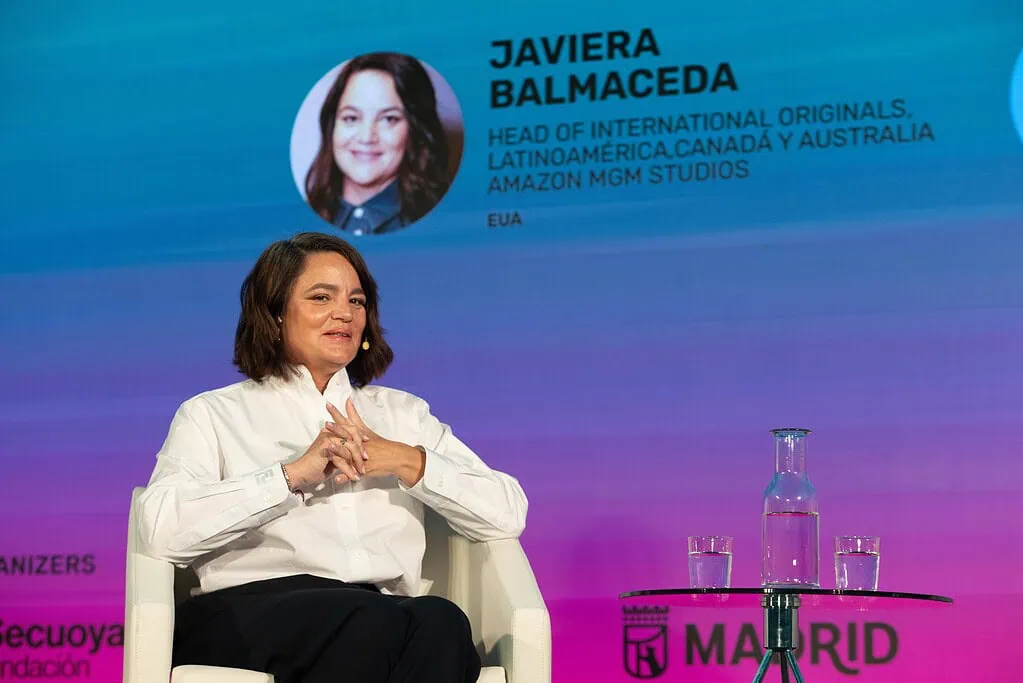
The Mexican case of “Venganza” points in the same direction. Starring Omar Chaparro, Alejandro Speitzer and Paola Núñez, the film follows a member of the special forces who, after the murder of his wife and an unexpected lottery win, uses his newfound fortune to pursue those responsible. The production remained in Prime Video’s Top 10 for eight weeks, according to data shown by the platform itself.
For the Amazon MGM Studios executives, the challenge is not simply to replicate formulas that already work in the United States, but to demonstrate that markets such as Spain and Mexico have the talent, production capabilities and stories required to generate content with international potential. This equation involves globally recognisable genres, the choice of talent and, above all, an emotional dimension that enables a story to work beyond its market of origin.
Crece el interés de inversores autónomos por la industria audiovisual española
Investment funds in Spain are beginning to highlight growing interest among self-employed investors in participating in the financing of audiovisual projects through tax incentives that allow them to deduct taxes while at the same time becoming involved with a quality product from one of the country’s strongest industries.
On the first day of the sixth edition of Iberseries & Platino Industria, the panel “Estructuración financiera: el nuevo mapa de los fondos en España” highlighted that Spain’s current tax policy for productions has, on the one hand, enabled the creation of a financial ecosystem for films and series and, on the other, made the country an attractive destination for foreign investors.
Explaining the investment structures currently being used, Andrés Sánchez Pajares, CEO of Filmika Audiovisual (Spain), noted that most operators offer participation through tax incentives that guarantee a return, although his organisation has also opted for risk investment, which does not provide a short-term return and depends on other long-term factors, but “it is working and there is room for greater investment.”
Juan Antonio García Peredo, Managing Partner of Elipsis Capital (Spain), explained that attracting investors to audiovisual projects has been a highly structured and not always easy process, using tax incentives to finance projects with investors including companies, self-employed individuals, partners at law firms, notaries and insurance companies. “It is a different product from others, one that has a guaranteed return, and that creates an appetite for investment, because they do it to save on taxes and they feel connected to the product.”
For his part, Miguel Doria, from Arcano Asset & Capital Finance (Spain), agreed that “there are more individual investors, whereas a few years ago companies were the majority. There has been an evolution and more people are investing. They like to talk about it and they go to premieres, and that creates a knock-on effect.”
The speakers also agreed that tax incentives are appropriate for continuing to promote investment and that they could even remain in place in the event of a future political change in Spain’s government.
Dos de cada tres coproducciones audiovisuales internacionales se realizan entre dos mercados
International audiovisual co-production remains concentrated among a relatively small group of markets, despite having become a widespread practice globally. This was explained by Gloria Saló, Director of Production and Content Consulting at GECA, and Lucía Gómez, Content and Formats Analyst, who noted that a total of 50 countries participated in co-productions between 2023 and 2026. The United States leads the market with 125 titles, while Spain accounts for 25 co-productions and Mexico for 22. In addition, two out of every three productions analysed correspond to bilateral agreements between two markets.
Drama series lead this model, with 185 titles recorded, although GECA particularly highlighted the importance achieved by animation, which now ranks second. Suspense and mystery, police and detective stories, and action and adventure are among the most common subgenres, a trend that shows how co-productions seek recognisable narrative codes and universal themes capable of working across different territories.
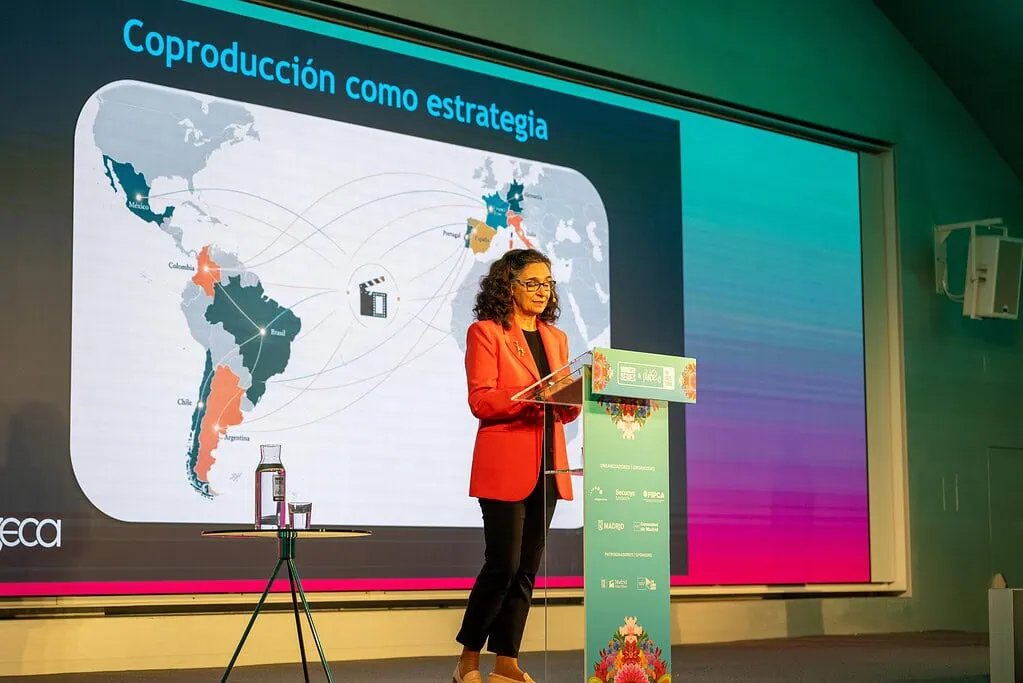
The very concept of co-production is also evolving: alongside the traditional model are platform commissions, development partnerships and agreements structured around pre-existing IPs, ranging from fiction formats to books or podcasts. According to GECA, working with already established intellectual properties helps reduce the perception of risk by starting from stories with existing recognition and a pre-existing potential audience.
In this context, Spain can serve as a gateway to Europe thanks to its financing, incentives and technical capabilities, while Portugal connects Europe with the Portuguese-speaking world, positioning the Iberian axis as a bridge for expanding partnerships between Europe and Ibero-America.
JustWatch: “La intención es el dato”, para conectar cada contenido con su audiencia
Viewer intent has become one of the most valuable signals for navigating an audiovisual ecosystem increasingly saturated with content. Ingke Purrmann, co-founder and Chief Revenue Officer (CRO) of JustWatch, explained that the company starts precisely from users’ willingness to watch a particular piece of content, and even to spend time or money on it, to guide its marketing strategies. “Intent is data. It is a relevant signal that we observe,” Purrmann said. Founded in 2014, JustWatch’s platform is currently available in 140 countries.
Searches, adding titles to watchlists and user clicks provide signals about their tastes and make it possible to build highly segmented audiences. Purrmann used comedy as an example: two viewers may say they like the genre and yet one may prefer irreverent comedies while another prefers sitcoms. “Every genre has multiple subgenres,” she noted. JustWatch and JustWatch Media now identify more than 135 subgenres that can be targeted in campaigns, adapting this segmentation to the specific characteristics of each territory. “Spain is not Germany. Germany is not the United States. Brazil is not the United States,” Purrmann stressed, explaining the importance of localising audiences in each market.

This knowledge of viewers is subsequently applied to campaigns that extend beyond the platform itself. JustWatch works on 450 campaigns annually and receives 50 million visits per year. Based on the signals gathered, it builds an initial audience that can subsequently be expanded to reach similar audiences through digital platforms such as YouTube, Meta and TikTok. In this way, the strategy seeks to connect each title with viewers who have shown signals that they may genuinely be interested in watching it.
Creadores sin fronteras: lo hiperlocal se abre camino para conectar con audiencias globales
The panel “Creadores sin fronteras: Historias con pasaporte global” brought together Amaya Muruzabal, CEO & Head of Content at M Content, and screenwriters Isabel Peña and Eduard Sola at Iberseries & Platino Industria to discuss different ways of understanding the relationship between authorship and audiences. Muruzabal acknowledged her interest in crossing borders and reaching audiences: “We always have more auteur-driven interests, interests in expression, but I am very interested in reaching audiences.” Peña starts from the opposite end: “When I am writing, I am incapable of thinking about the big picture. I have enough on my plate just trying to find my own version.”
Sola placed the viewer at a later stage of the creative process: “I can’t forget about the audience, but there has to be something there already; in other words, it is not the starting point.” He also warned of the risk of writing directly for a specific audience: “If we write for someone in particular, it is as though you were tailoring a suit for them, when what the viewer came to buy is your design, your story, your life, your creation.”
Muruzabal advocated for Spanish to gain greater weight in the global industry: “I would love Spanish to become an international reference language, to have the budgets and to move the needle,” and to achieve this, she pointed to the need to “start telling stories that explore what we have in common,” from a creative perspective and not solely a financial one.
Sola championed the power of the local and cited “Casa en flames” as an example, a Catalan-language story about the Catalan bourgeoisie that has resonated with viewers in countries such as Colombia, Ecuador and Belarus. “Ultimately, there is something hyper-global in the hyper-local,” he summarised. Peña, for her part, celebrated the fact that successes continue to emerge outside strategies and forecasts: “When something breaks out, I applaud loudly.”
“Trazos ocultos”, el nuevo thriller de Atresmedia y la propuesta de Radio Ambulante Studios para ver una serie con los ojos cerrados en los ‘Iberscreenings Próximamente’ de esta primera jornada
The first day of this sixth edition of Iberseries & Platino Industria brought attendees “Trazos Ocultos”, Atresmedia’s new thriller, the unsettling domestic noir set to arrive in 2027 as one of Atresmedia’s major fiction projects, starring Toni Acosta and Rodolfo Sancho. Set on the island of Tenerife, the fiction centres on the figure of the impostor: a man with an impeccable and seductive façade, capable of lying and manipulating others in order to sustain a life built on appearances.
The new series was written by screenwriters Sara Cano Escudero and Paula Fabra Urdiola, creators of “Ángela”, who explained that the series was originally conceived in Madrid, taking into account the male character’s double life, but following the change in filming location for production reasons, “we realised that Tenerife has many lives within it.”

La actriz Toni Acosta, originaria de Tenerife, ha considerado que este papel “es un regalo”, no solo por hacerlo en su lugar natal sino porque constituye un cambio de registro a sus habituales papeles de comedia, pero además “yo soy de Canarias, soy de ahí, sé de dobles vidas, era el lugar perfecto”. Para Laura Abril, directora Ejecutiva de Ficción y Desarrollo de Negocio Global de Buendía Estudios, “no se trata de un thriller cualquiera” y ha dicho que de la necesidad de ir a Canarias por tema de financiamiento “hemos encontrado una ventaja, lo integramos en la trama”.
A su vez, Montserrat García, directora de Ficción de Atresmedia, España ha asegurado que “queremos seguir explorando el thriller emocional, tras ‘Ángela’ y ‘Mentiras’; es un contenido que nos encaja para Atresplayer, son historias ambiciosas, con equipos artísticos potentes y son historias que viajan muy bien, además de que queríamos trabajar de nuevo con Buendía Estudios”.
En la sección de Iberscreenings Próximamente de esta primera jornada presentaron también “Cómo ver una serie con los ojos cerrados”, una propuesta de Radio Ambulante Studios para adaptar un podcast narrativo suyo a una serie de televisión, a partir de “Las vidas de Marilú” como caso real.
La historia gira en torno a Marilú, quien se convierte al islam sola en su habitación de Monterrey, México y se casa con un marroquí al que conoció en Facebook. Viaja a Madrid, tienen dos hijos y un día al amanecer llegan agentes, es esposada y a los niños les dicen que su padre está en una granja. Nueve meses después, la detienen a ella a la salida del colegio acusándola de enaltecimiento del terrorismo teniendo como pruebas una vida de profunda devoción religiosa. Llega la condena. El Tribunal Supremo la anula, pero la familia sigue hecha pedazos.
Silvia Viñas, directora de Desarrollo de Nuevas Producciones de Radio Ambulante Studios, EUA, compartió con los asistentes cómo les llegó la historia a partir de la noticia y cómo empezaron a encontrar cada vez más elementos, de manera que ella misma se reunió con la propia Marilú, cuidando en todo momento la ética periodística. Patricio Wills, CEO de W Studios, de EUA apuntó que desde el principio vieron una historia potente al ver que alguien en México se hubiera convertido en musulmán, con todo el fervor guadalupano de ese país y que viniera a España para casarse con un musulmán, “una mezcla cultural muy interesante”.
Juancho Cardona, director General, 11:11 Films & TV, México, sostuvo que “lo importante en este camino fue ver que hay un deseo de coproducir entre México y España, y que, aunque llegue a este país, sigue siendo muy potente e interesante para México; estamos trayendo el mejor talento y se unirá Cecilia Suárez, por lo que será un proyecto de relevancia para ambos lugares y ahora buscamos aliarnos con socios estratégicos aquí”
“Amores Perros” pertenece a la memoria de todas las personas que la hicieron posible: Mónica Lozano
La primera jornada de esta cita audiovisual concluyó con una función de gala en la sección Iberscreening Función de Gala de la película “Amores Perros”, dirigida por Alejandro González Iñárritu, multipremiada y una de las principales referencias del cine contemporáneo mexicano.
Al presentar el filme, Mónica Lozano, productora asociada de la película, ha expresado que es un motivo de orgullo y privilegio poder exhibirse la cinta a 26 años de su estreno y con ello “distinguir el trabajo de todos aquellos que la hicieron posible, que pusieron su entusiasmo, su rigor y profesionalismo: todos los sin nombre”.
En la sala Azcona de la Cineteca de Matadero Madrid, ha recordado que además del liderazgo de González Iñárritu y del guion de Guillermo Arriaga, hubo muchas personas que participaron de la realización, y que como en su momento escribió la también productora del filme Tita Lombardo: “la película pertenece a la memoria no solo del director y la producción, sino a los que la vivieron; cada testimonio suyo cuenta una historia distinta y todas esas historias forman la verdadera historia de Amores Perros”.
Lozano también ha apuntado que muchas de esas personas continúan en activo y luchando para que el cine mexicano sea vigoroso y logre el reconocimiento nacional e internacional con sus producciones. La película proyectada en el marco de “México, País en Foco” dedicado en esta jornada a la industria audiovisual mexicana, ha sido una oportunidad para que los espectadores vuelvan a acercarse a su cultura, y como ha asegurado Lozano “a una parte de México y de sus contradicciones”.
Iberseries & Platino Industria está impulsado por EGEDA y Fundación Secuoya, en colaboración con FIPCA, con el patrocinio de Madrid Film Office y Film Madrid Region, y el apoyo del Ministerio de Cultura, Clúster Audiovisual de Madrid, Spain Film Commission e ICEX España Exportación e Inversiones, entre otras entidades.
Actress Toni Acosta, originally from Tenerife, described the role as “a gift,” not only because she is playing it in her homeland but also because it represents a change from her usual comedy roles. She added: “I’m from the Canary Islands, I’m from there, I know about double lives; it was the perfect place.” For Laura Abril, Executive Director of Fiction and Global Business Development at Buendía Estudios, “this is not just any thriller,” and she explained that out of the need to go to the Canary Islands for financing reasons, “we found an advantage; we integrated it into the plot.”
Montserrat García, Director of Fiction at Atresmedia, Spain, stated that “we want to continue exploring the emotional thriller, following ‘Ángela’ and ‘Mentiras’; it is content that fits Atresplayer, these are ambitious stories, with strong artistic teams, and they are stories that travel very well. We also wanted to work with Buendía Estudios again.”
The Iberscreenings Próximamente section on this first day also presented “Cómo ver una serie con los ojos cerrados”, a proposal by Radio Ambulante Studios to adapt one of its narrative podcasts into a television series, using “Las vidas de Marilú” as a real-life case.
The story revolves around Marilú, who converts to Islam alone in her bedroom in Monterrey, Mexico, and marries a Moroccan man she met on Facebook. She travels to Madrid, they have two children and one morning, at dawn, agents arrive, she is handcuffed, and the children are told that their father is on a farm. Nine months later, she is arrested outside the school and accused of glorifying terrorism, with a life of profound religious devotion presented as evidence. She is convicted. The Supreme Court overturns the conviction, but the family remains shattered.
Silvia Viñas, Director of New Production Development at Radio Ambulante Studios, USA, shared with attendees how the story first reached them through the news and how they began to uncover more and more elements, to the point that she herself met with Marilú, while taking care to uphold journalistic ethics at all times. Patricio Wills, CEO of W Studios, USA, noted that from the outset they saw a powerful story in the fact that someone in Mexico had converted to Islam, amid all the Guadalupan fervour of the country, and had come to Spain to marry a Muslim man, “a very interesting cultural mix.”
Juancho Cardona, Managing Director of 11:11 Films & TV, Mexico, said that “the important thing along this journey was to see that there is a desire to co-produce between Mexico and Spain, and that, although it comes to this country, it remains very powerful and interesting for Mexico; we are bringing in the best talent and Cecilia Suárez will join, so it will be a project of relevance to both places, and we are now looking to partner with strategic partners here.”
“Amores Perros” pertenece a la memoria de todas las personas que la hicieron posible: Mónica Lozano
The first day of this audiovisual event concluded with a gala screening in the Iberscreening Función de Gala section of the film “Amores Perros”, directed by Alejandro González Iñárritu, an award-winning film and one of the leading landmarks of contemporary Mexican cinema.
Introducing the film, Mónica Lozano, associate producer of the movie, expressed that it was a source of pride and a privilege to be able to screen the film 26 years after its release and, in doing so, “recognise the work of all those who made it possible, who contributed their enthusiasm, rigour and professionalism: all those whose names are never known.”
At the Sala Azcona at Cineteca Matadero Madrid, she recalled that in addition to González Iñárritu’s leadership and Guillermo Arriaga’s screenplay, many people were involved in making the film and, as the film’s fellow producer Tita Lombardo once wrote: “the film belongs to the memory not only of the director and the production team, but of those who lived it; each of their testimonies tells a different story, and all those stories make up the true story of Amores Perros.”
Lozano also pointed out that many of those people remain active and continue fighting to ensure that Mexican cinema remains vibrant and that its productions achieve national and international recognition. The film, screened as part of “México, País en Foco”, dedicated on this day to the Mexican audiovisual industry, offered viewers an opportunity to reconnect with its culture and, as Lozano stated, “with a part of Mexico and its contradictions.”
Iberseries & Platino Industria is promoted by EGEDA and Fundación Secuoya, in collaboration with FIPCA, with the sponsorship of Madrid Film Office and Film Madrid Region, and the support of the Ministry of Culture, Clúster Audiovisual de Madrid, Spain Film Commission and ICEX España Exportación e Inversiones, among other organisations.