- Series reaffirm their ability to generate empathy, open up debates and address major social issues, with stories that seek to connect with audiences and offer new perspectives on reality
- The rise of microdramas is paving the way for a language of their own and new production dynamics, while the industry explores how to respond to consumption habits shaped by fragmented attention
- FIPCA begins the celebrations of its 30th anniversary at Iberseries & Platino Industria, looking ahead to the future challenges facing the Ibero-American audiovisual industry and to promoting greater circulation of its works.
The second day of Iberseries & Platino Industria 2026 has focused on the ability of stories to connect with audiences and generate conversation, but also on an audiovisual industry seeking new ways to create, produce and reach the public. Series as a vehicle for addressing major social issues, the defense of a distinctive identity and the constant search for new ideas have run through many of the meetings held at Matadero Madrid.
The transformation of the sector has also been at the heart of a day marked by adaptation to new consumption habits and business models, the development of intellectual property and the promotion of alliances and co-productions capable of extending the international reach of content. In this context, microdrama is emerging with a language and production dynamics of its own, while companies and production companies explore formulas to respond to an increasingly fragmented audience.
Iberseries & Platino Industria has also served as a showcase for new fiction and non-fiction productions, from upcoming projects by RTVE, Secuoya Studios and Netflix, to new ways of bringing stories and characters to the screen. The day also hosted the start of the celebrations for FIPCA’s 30th anniversary, with the federation using the occasion to look to the future and raise challenges such as the circulation of Ibero-American works, professional training and the strengthening of industry alliances.
Series, a major showcase for addressing the issues that matter to the world
Series have the ability to offer viewers a perspective that helps them face the problems affecting societies. Hope, a call to action and an invitation to confront important challenges are some of the immediate feelings left by many stories that reach the screen, audiovisual writers and screenwriters agreed at the sixth edition of Iberseries & Platino Industria.
The panel entitled “Series to Change the World” featured Louis Aubert, creator (France), one of the creators of the series “Phoenix”, which criticizes the inaction of major polluting companies in the face of climate change: “a production that hooks people, and perhaps it is not going to change the world, but it can change people’s mindset. It has a universal message and calls for action on an issue like this.”
In the panel moderated by Al Williams, audiovisual consultant at Alita de Pollo (Netherlands), Spanish director, screenwriter and actress Leticia Dolera highlighted the impact of her series “Pubertad”, which encourages people to talk about an issue as close to home as sexuality with their children, and which is now being discussed in schools. From another perspective, Danish Jeppe Gjervig Gram, showrunner & screenwriter at Secret Chord ApS, recalled that his series “Borgen” helped open the way to addressing politics and the formation of party alliances in his country, also connecting these issues with family, economic and suspense-related dimensions.
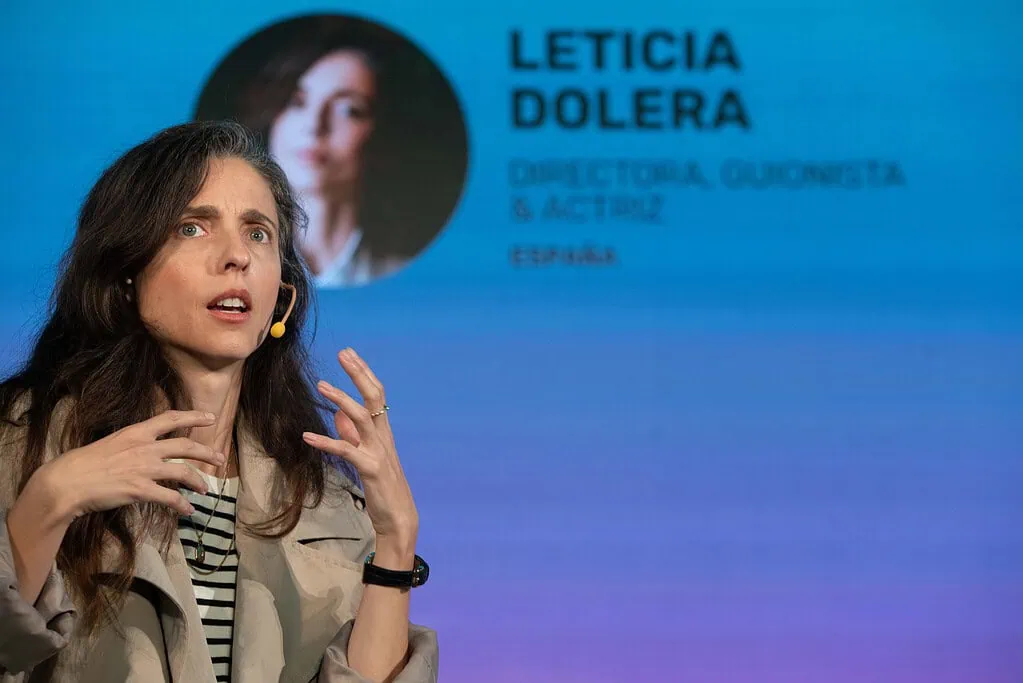
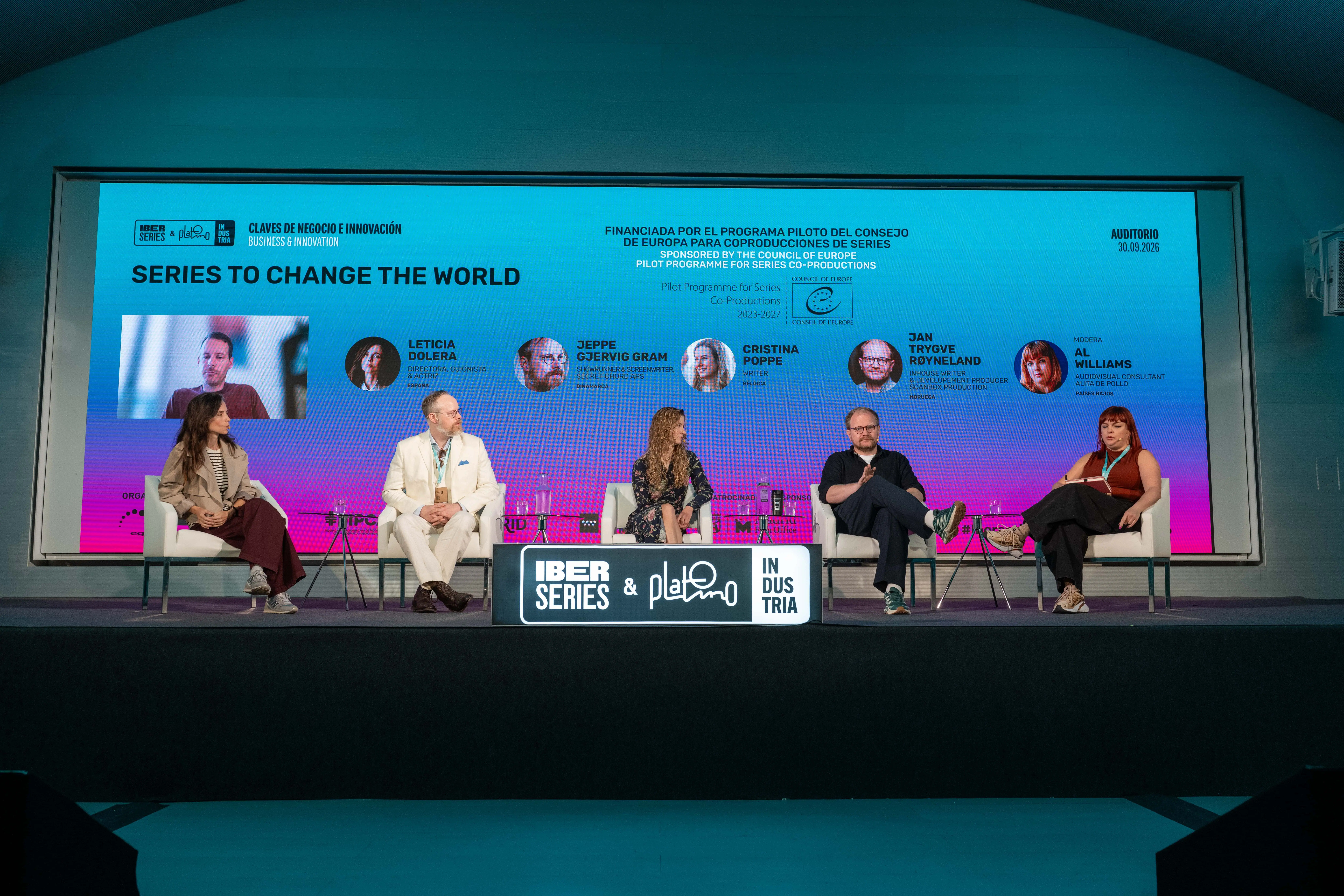
For Belgian screenwriter Cristina Poppe, her series “El mejor inmigrante” has brought to the screen a story that years ago would have been a dystopia: the far right decides to expel those not born in the country and a television competition offers a residence permit. “I don’t believe that series and films change the world, but they can generate empathy, tell stories about people who are having a hard time and open up debates.”
For his part, Norwegian Jan Trygve Royneland, in-house writer & development producer at Scanbox Production, noted that his soon-to-be-released series “Henky” is based on the story of one of the first HIV cases in his country, who was fired and, after filing a complaint, won a highly controversial court case, although the person involved died a few months later. “What we want to convey is a positive feeling and an energy that says we have to fight against injustices like the one suffered by the character.”
Adaptability, one of Atresmedia’s keys to growth in the audiovisual industry
During this second day of the sixth edition of Iberseries & Platino Industria, Atresmedia Managing Director José Antonio Antón highlighted that adaptability has been one of the keys to growth in an industry undergoing as many changes as the audiovisual sector, where technology, production models and business models have been transformed over the last decade.
Atresmedia has consolidated its position at the top by becoming the engine of its own disruption, transforming itself every day and completely redesigning the concept of the life cycle of its products and content. Its strategic flexibility has also driven it to maximize value through strategic and international alliances with giants such as VIX, Disney+, Netflix, ZDF and ITV, demonstrating that agreements with platforms do not weaken the brand, but exponentially increase the ambition and global impact of local drama.
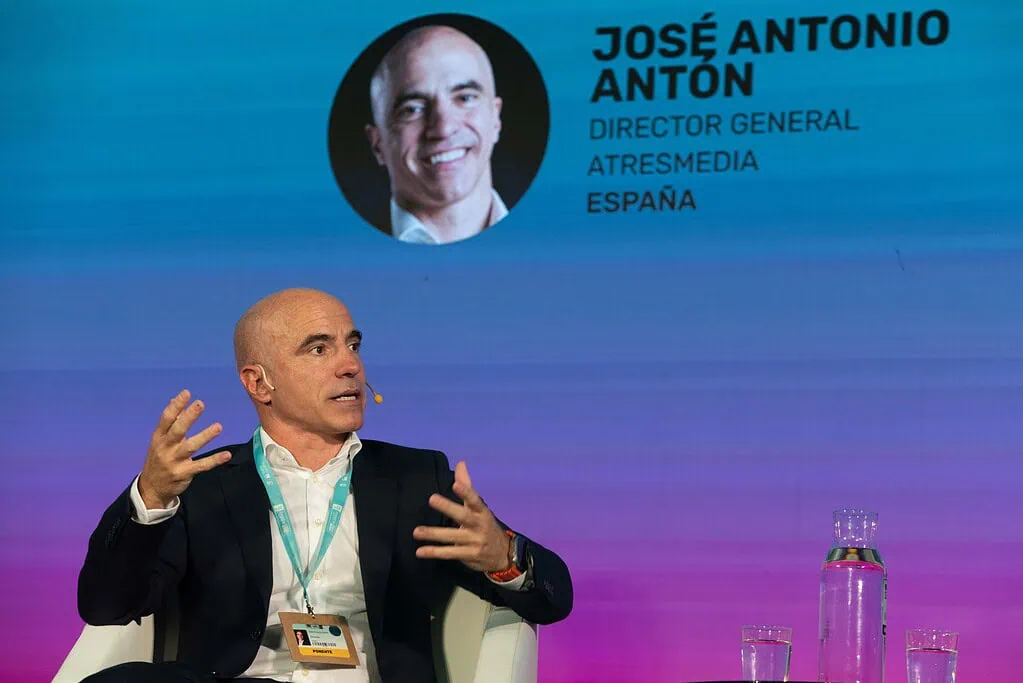
In the Keynote, José Antonio Antón stated that constant transformation is the key to understanding the secret of Atresmedia’s success and explained that the model of having its own channels alongside alliances with other platforms delivers very good results, including sustaining long-term viewing and, in some cases, the leadership of some of its productions, such as “La Casa de Papel” and, more recently, “Veneno”.
In his conversation with journalist Alberto Rey, he acknowledged that this is an industry in which not every product succeeds, and that to some extent it is impossible to predict what will happen with certain productions despite the many aspects that different teams take care of in each project. He also highlighted the importance for a company such as Atresmedia of always having projects and licenses for creations (IP), which makes it possible to begin planning the content it wants to present to the public, understand how to generate value from it and continue producing content.
This is the right time to consolidate a European identity through audiovisual co-productions
Europe has the capacity to consolidate “a European identity” through co-productions between different countries, offering attractive stories for audiences that showcase different geographies, cultural aspects and languages, while also appealing to other markets around the world, production company representatives said during the second day of the sixth edition of Iberseries & Platino Industria.
At the conference “Breaking Rules: The Co-Production Map”, held in the Plató room at Cineteca Matadero Madrid, trailers for series and films jointly produced by companies from different countries were shown, highlighting how European audiences are interested in narrative content first from their own country, but also in broadening their view to what is happening in other countries.
In this context, Alfredo Bermúdez de Castro Berbel, Chief Operating Officer of Secuoya Studios (Spain), expressed his company’s interest in participating in co-productions and in this ecosystem by making available the infrastructure and teams it has in both Spain and Latin America for ideas developed jointly with production companies from other countries and approached in different languages.
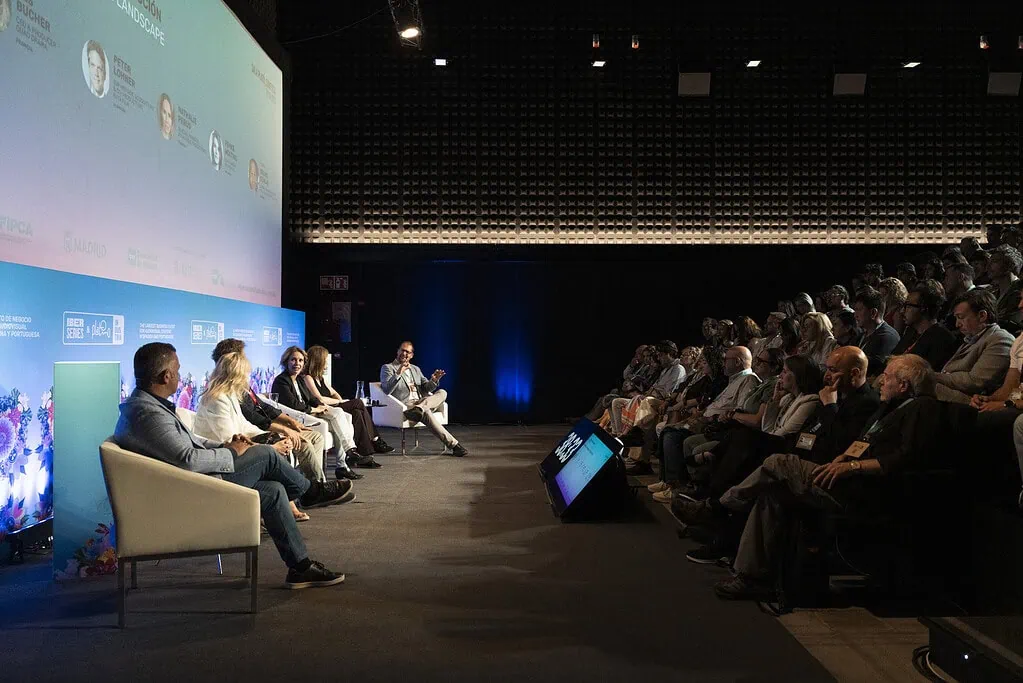
During the panel, Peter Lohner, SVP Hispanic Acquisitions & Co-productions at Beta Film (Germany), presented projects in which he has participated, such as “Raise oh the raven” and “La vida Barcelona”, and argued that “a European identity” is possible through stories that attract audiences in different countries, are produced by several players across the continent and use different languages, thereby “having a voice of our own in an increasingly competitive global market”.
Iris Bucher, CEO & Producer at Quad Drama (France), presented “La madre perfecta”, a France-Germany co-production set in both countries and spoken in both languages. “Dubbing is not something we are considering; subtitles, perhaps. But languages have to be spoken as they are in real life; people are more accustomed to that and they ask for it.” Another option is represented by the series “The Kollective”, presented by Femke Wolting, co-founder of Submarine (Netherlands), which, while entirely in English, features actors and settings from several European countries and is intended to be watched by audiences in other markets around the world.
For her part, Nathali Wolting, General Manager at Atlantique Productions (France), presented several of the company’s projects and said that co-productions are a challenge but at the same time “a wonderful human experience”, in which there must be clear rules from the outset, collaborative work and alignment among all participating parties. Regarding the use of languages, she stressed that “it has to be something organic”, according to the needs of the story.
FIPCA begins celebrations for its 30th anniversary at Iberseries & Platino Industria
The Ibero-American Federation of Film and Audiovisual Producers (FIPCA) begins, at this gathering of the Ibero-American audiovisual industry, the celebrations marking 30 years of promoting and defending Ibero-American audiovisual production. This commemoration looks to the past to understand its evolution, but above all opens a reflection on the challenges of the present and the role it will need to assume in the future of the sector.
The start of the celebration brought together former president Adrián Solar, producer Gerardo Herrero, current treasurer Mela Márquez, former vice-president Mónica Lozano and current president Ignacio Rey in a conversation led by the Federation’s Executive Secretary, Antonio A. López. Future objectives include relaunching the Ibermedia program and helping to make visible a portion of the region’s film output that remains unseen even within its own countries. “Generally speaking, there is an economic gap in our films; when we sell them, it is easier to sell them in Europe than in our own region,” Rey said.
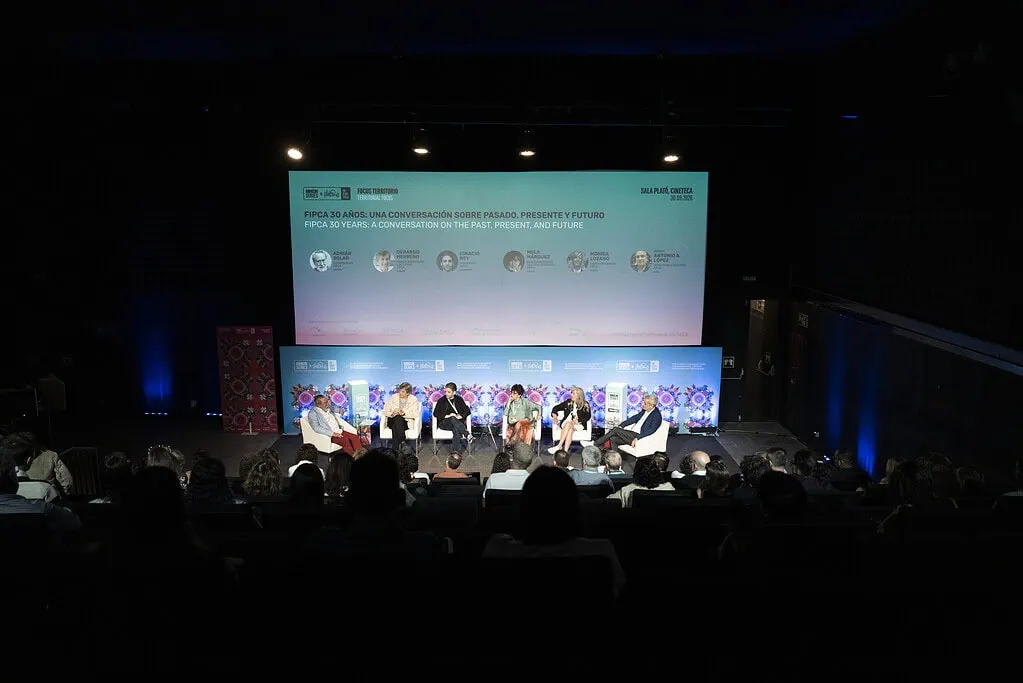
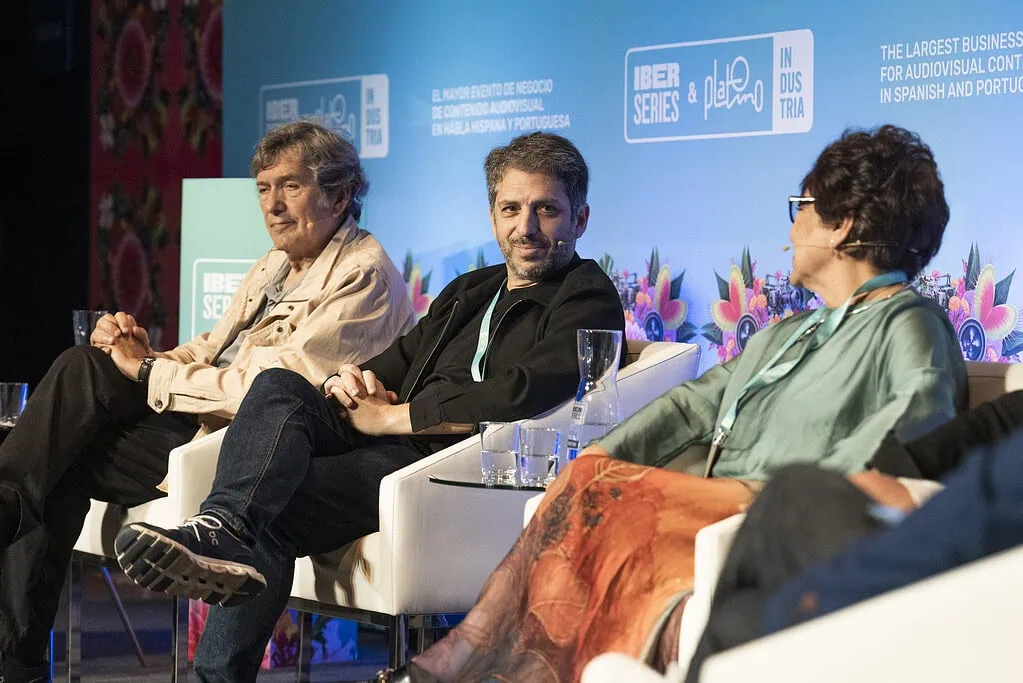
Another topic was training. “We have realized that there is no shortage of film schools in Latin America, but there is an important part of professional training—both for those working in production and for technicians in general—that requires work experience and theoretical training, because what one learns at film school is usually not enough to enter the job market.”
He also spoke about strengthening alliances with organizations such as the Organization of Ibero-American States (OEI) and the Inter-American Development Bank (IDB), building on everything achieved with the support of EGEDA and through relationships with the various film festivals in the Ibero-American region.
Secuoya Studios brings action, romance and suspense with Can Yaman in “El laberinto de las mariposas”
The second day of the sixth edition of Iberseries & Platino Industria hosted, in Cineteca’s Sala Borau, the Iberscreening of the first episode of “El laberinto de las mariposas”, the new fiction series from Secuoya Studios starring Can Yaman. Andrés Zamora, Global Distribution Director at Secuoya Studios, and Eduardo Galdo, executive producer, presented this eight-episode romantic thriller directed by Alberto Ruiz Rojo, whose cast also includes María de Nati, Andrea Duro, Félix Gómez and Michelle Calvó.
The series follows a secret agent with an impeccable record who, overnight, becomes the most wanted man in Spain and must clear his name while trying to unmask those planning a multimillion-euro robbery of the State’s coffers. “When we met Can Yaman, we wanted to create something tailored to him,” Galdo explained, highlighting how quickly the actor became known in Spain and the audience response after his first appearances in the country.
Developed together with Mediaset, the production combines “action, romance and suspense perfectly”, according to Galdo. “We thought he only worked in romantic stories or similar genres, but here he gives a fantastic performance full of empathy,” he said of Yaman. The actor plays “a typical spy” who ends up discovering “another side of his heart”, in a story that brings together “a great love story and a great friendship story”, as well as a mother’s fight for her daughter.
Conceived as “pure entertainment” and as “a franchise with potential for future seasons”, “El laberinto de las mariposas” also has international ambitions. Zamora announced that the series “will premiere in the last quarter of the year here in Spain and Italy, and then it will reach many other territories, as we have already closed significant pre-sales, so we hope to have more news soon”.
Diversity and the search for new ideas, in the DNA of Ibero-American production companies
The diversity of proposals, adaptation to the new challenges of the audiovisual market and the constant search for new ideas are among the keys that Ibero-American production companies rely on to remain content creators for an increasingly demanding industry, representatives of some of the longest-established production companies attending this Ibero-American audiovisual gathering said.
The “Spotlight: IMAGINA: The DNA of Content Production” also highlighted the promotion of talent for original creations (IP), work across several television genres and collaboration with platforms and other industry players as factors that have also contributed to the growth of the content offering over the years.
María José Rodríguez, Managing Director of Globomedia (Spain), highlighted the variety of productions considered historic, such as “Caiga quien Caiga”, “La Noche H”, “Zapeando” and “El Intermedio”, as well as more recent fiction projects such as “Barrio Esperanza” for TVE and the current production of “Cuando solo quedemos nosotros” for Prime Video. “We are proud of our past and of what we are building; we have a future that excites us greatly. We take nothing for granted, we look for the best talent, the best creators, and we look for new things,” she emphasized.
At the event in the Matadero Madrid Auditorium, Alejandro Flores, director of 100 Balas (Spain), highlighted recent works such as “Celeste”, “Yakarta” and “Su Majestad”. “The value of these stories lies in their highly original creators, who leave a mark on the Spanish and international markets; we do not make series thinking about whether they will travel, and we should not be afraid of being local. ‘Yakarta’ and ‘Celeste’ deal with Spanish themes, but with universal concepts that give them a voice of their own,” even in other markets.
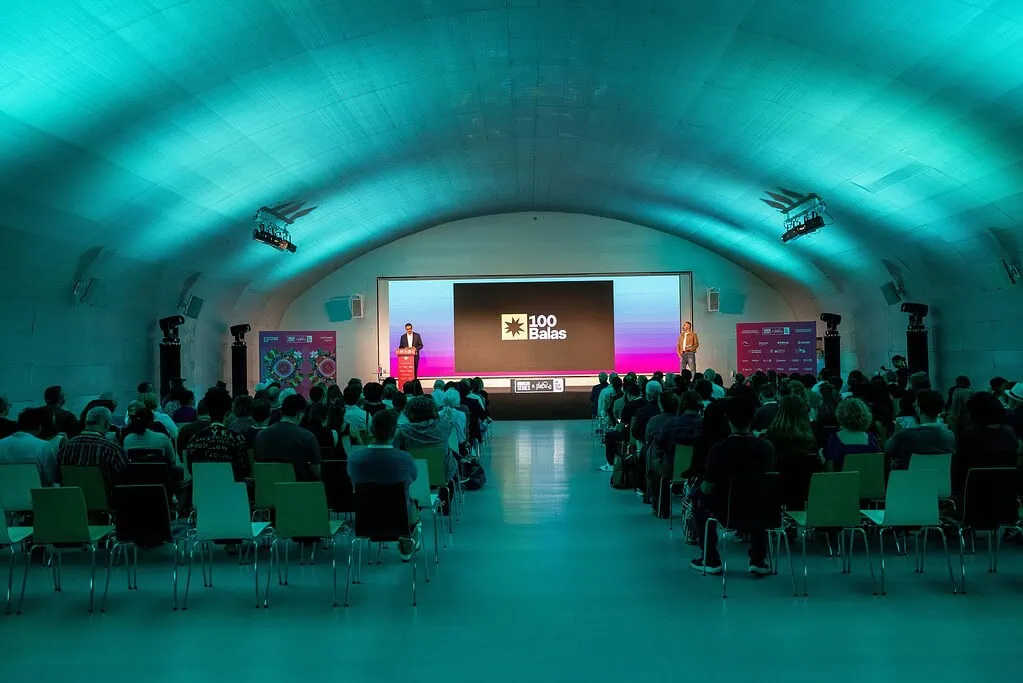
Carmen González, Managing Director of Big Bang Media (Spain), presented the recent evolution of the program “Malas Lenguas” for Televisión Española, while the company has also worked on fiction such as “Ser no ser” for RTVE Player, and “Perdida”, available on Atresmedia, while developing adaptations of novels that will allow the production company to continue growing.
For Uruguayan production company Cimarrón, its CEO Santiago López took the opportunity to announce that the company is moving from producing projects for other partners to creating its own content with a Latin American focus. Specifically, three productions are being developed for next year, in an approach that includes supporting authors from the beginning to the end of the project, allowing each story to find its own way of being made and seeking out the people needed “without being afraid to talk about things and enjoy the ideas”.
Meanwhile, Agustí Esteve, Managing Director of El Terrat, said that the company’s projects are characterized by the promotion of talent, honesty, risk-taking, playfulness, hard work and, in some cases, irreverence. From its catalog, he mentioned the current festival success of the film “5 Minutos Más” and the documentaries “Temps mort” (the story of basketball player Charles Thomas) and “Ser yo”, which follows actor Sergio Peris Mencheta through his cancer treatment while he was directing an artistic project remotely.
RTVE backs mainstream fiction with “Rojo sobre blanco” and “Rocío”
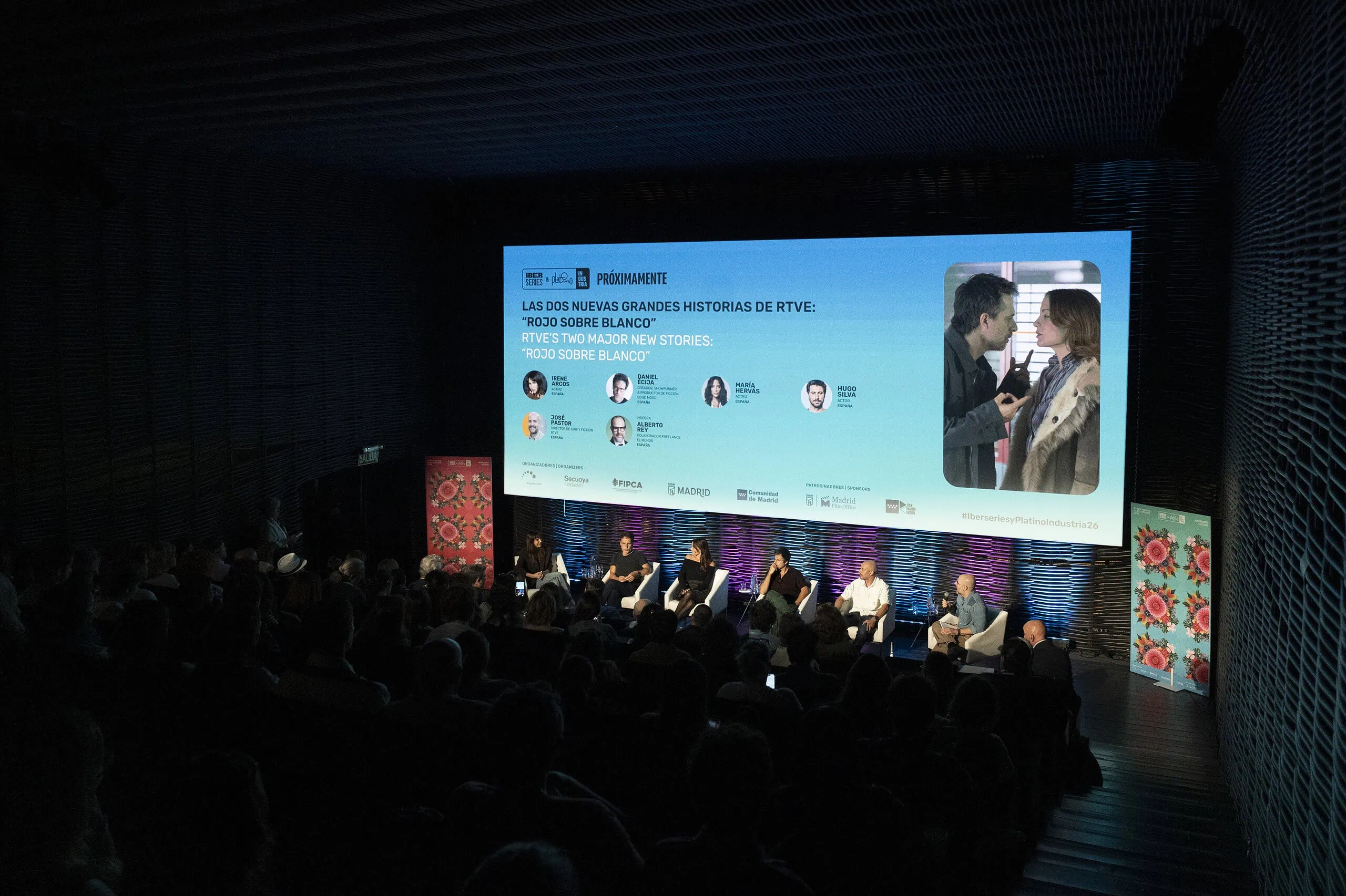
The Radio y Televisión Española corporation presented at Iberseries & Platino Industria a preview of two of its upcoming prime-time fiction projects: “Rojo sobre blanco”, a procedural police thriller created by Daniel Écija and starring Hugo Silva and María Hervás, which combines intrigue and comedy around the work of a police station and the collaboration of a forensic linguist; and “Rocío”, a four-part miniseries created by Aurora Guerra that traces the personal and professional journey of Rocío Jurado, played at different stages by Susana Córdoba and Carmen Raigón, from her most emblematic moments as an artist to her personal and family life.
Speaking about “Rojo sobre blanco”, Daniel Écija said with satisfaction that it is a series “with an identity of its own, with truth, a sense of humor, great talent and extraordinary quality in the scripts”, adding that “today it is very necessary to have an identity when there are close to a thousand productions a year; we have to make series capable of having several seasons after all the investment that goes into achieving the first one”. He also noted that “perhaps we have a series that could mark an era in the television industry”.
Actor Hugo Silva reviewed how the industry has changed since the time when it was considered better to be a film actor than a television series actor. “For a decade now everything has merged; we all want to do everything because the quality is extremely high. It is just as enjoyable to take part in a film as in television, and the production teams are also the same,” he said.
Actresses María Hervás and Irene Arcos took part in the presentation. Hervás said that “the series has a lot of soul, it is very character-driven; you fall in love with their reactions and, if I were a viewer, I would want to go out for beers with them, I would want them to be my friends”, while Irene Arcos highlighted that Daniel Écija guided them on the characters’ arcs, “but when we met on set, the chemistry emerged”.
For José Pastor, Director of Film and Fiction at RTVE, “it is a series that recaptures the spirit of being at home, having a television without so many channel options, all gathering together to watch something; it is a tremendously entertaining series in which viewers will be very attentive to the interaction between the characters, and it is intended to be renewed and to keep adding characters”.
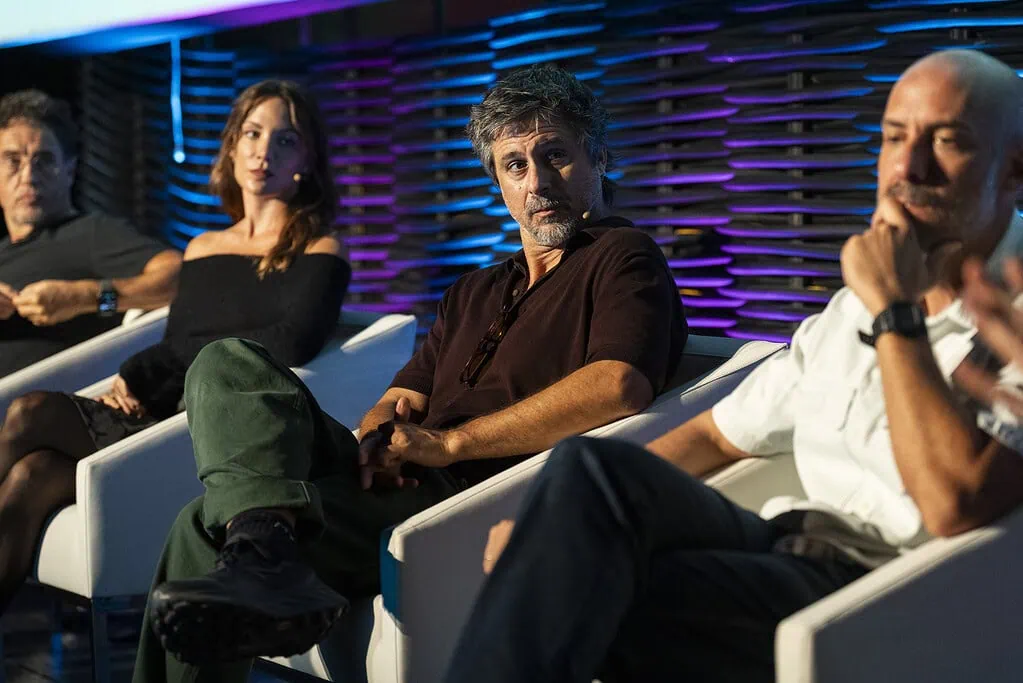
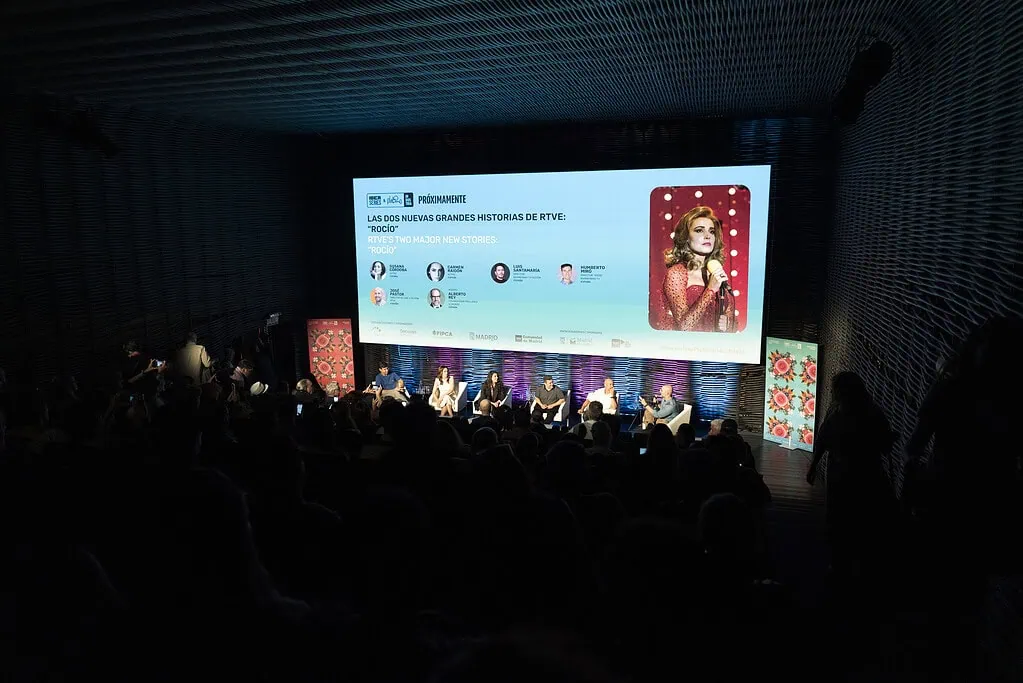
As for “Rocío”, it is a unique production consisting of four episodes of around 70 minutes each, which came to Boomerang TV, Spain, at RTVE’s request. “When José Pastor called us about this project, we realized it was an enormous undertaking, because the figure of Rocío Jurado is incredible and impossible to encompass, but we have also filmed in the house where she was born, where she lived, and there has been something mystical about all of it,” he said, adding that “we understood it was a project for free-to-air television, but we are sure it will travel very well”.
Humberto Miró, from Boomerang TV and director of the series, said that it is an “extremely respectful approach to the figure, steering clear of sensationalism, with the aim of also bringing Rocío to new generations without disappointing her lifelong admirers”. Actresses Susana Córdoba and Carmen Raigon, who portray different moments in the life of Rocío Mohedano Jurado, as she was originally named, highlighted the humanity of the Spanish actress and singer, while José Pastor stressed that “we want to make the series of the year, something that is not niche, that is for everyone”. The series “Rocío” also features the participation of Movistar Plus+.
“Mala llena eres de gracia”, an innovative way to tell the life story of Mala Rodríguez
Iberseries & Platino Industria screened the first images from the documentary “Mala llena eres de gracias”, which tells the life story of artist Mala Rodríguez in a disruptive way: a journey back to her childhood and youth, also seen through the stories of four other young women, all named María, whose experiences intertwine with her own life and songs.
The Iberscreenings section hosted on Wednesday the session “Mala Rodríguez, in the First Person: Presentation of the documentary ‘Mala llena eres de gracia’”, in which the singer, together with documentary director Jean Cosme Delaloye, executive producer at JCDe Productions (United States), and Fernando Jerez, Head of Non-Fiction at Mediacrest (Spain), discussed the making of this work, which has yet to premiere.
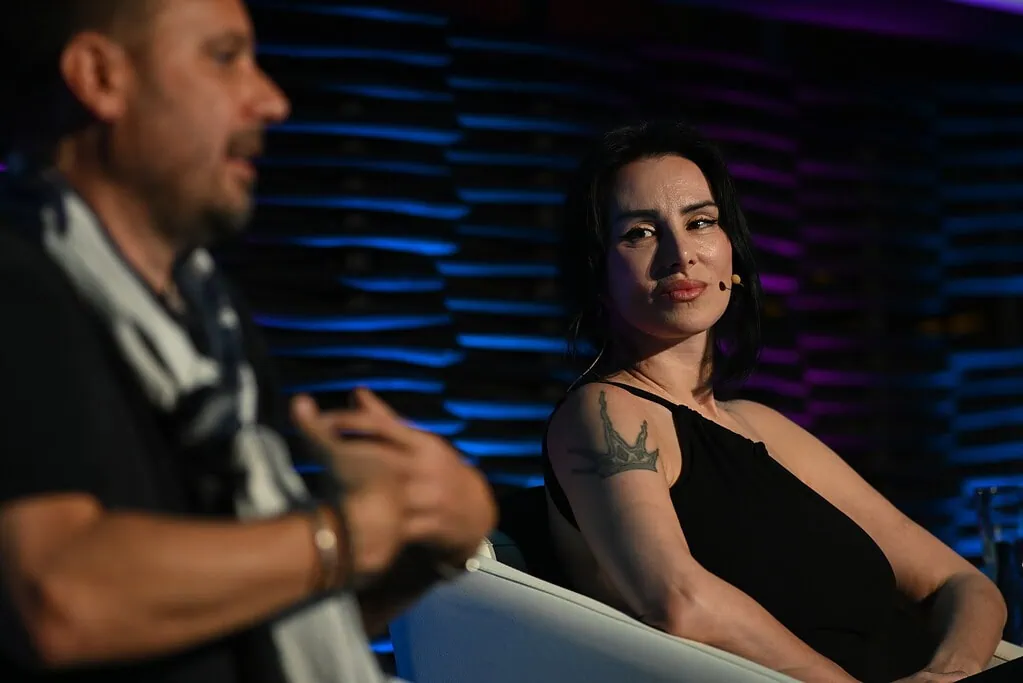
The Spanish artist expressed her satisfaction with this work, which began several years ago with her book “Cómo ser Mala” and later, together with Delaloye, with the search for a different way to narrate her past and build a documentary that brings her songs together with the stories of other women, creating echoes and their own ripples, so it is not a conventional documentary that tells her life in a linear way.
“It is a journey back into María’s life through the other four lives, which tell difficult stories in Mexico, Colombia, the United States and Spain. Together, it is a story of survival that multiplies,” Delaloye explained in the panel moderated by Mondo Sonoro journalist Álex Jeréz.
For Fernando Jérez, “it is a different story about a unique artist like Mala, and the production company Mediacrest was interested in a different, unconventional way of approaching the protagonist’s life. The result is a multicultural work that also addresses violence, immigration and mental health, which are universal issues”.
‘Criminopatía’, from podcast to Netflix: the challenge of putting images to a voice
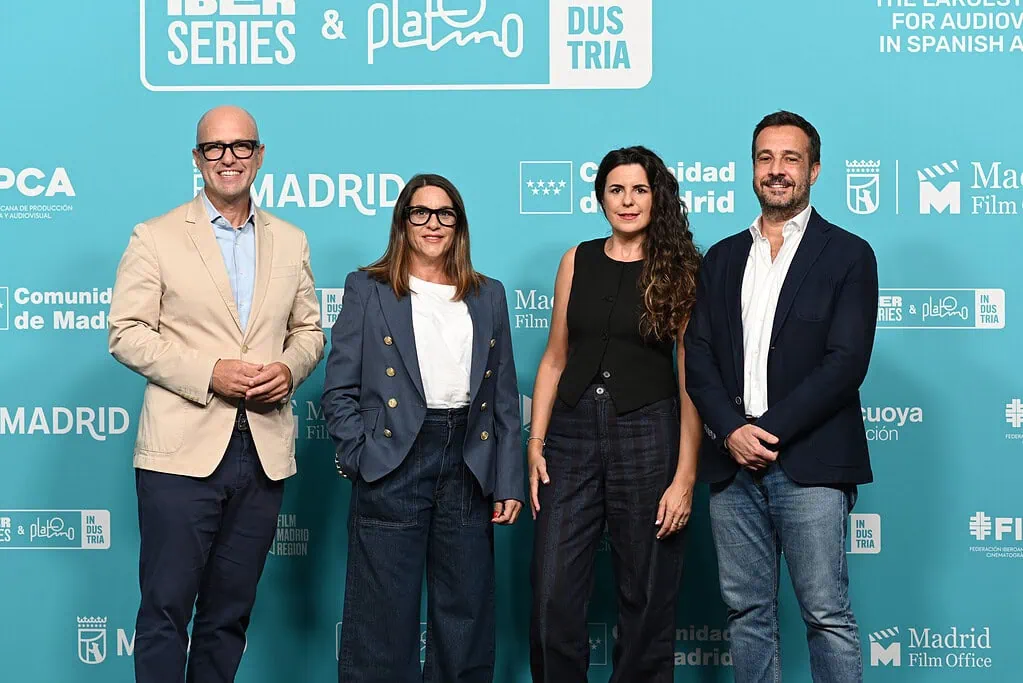
The move of “Criminopatía”, one of the most-listened-to true crime podcasts in Spanish, to Netflix was the focus of one of the meetings at Iberseries & Platino Industria in Sala Azcona at Cineteca Madrid. Clara Tiscar, Director & Host of the Original Podcast; Luis Calvo, Head of Content at GERSH; and Álvaro Díaz, Director of Non-Fiction Content for Spain and Portugal at Netflix in Spain, analyzed how to translate a phenomenon conceived to be heard into audiovisual language.
For Tiscar, there was one element that necessarily had to survive the change of format. “The essence is the voice; it is the only thing there is in the podcast. It is my voice, me telling a story. So what remains is the narrative voice, which I will narrate, and everything else is new,” she explained during the presentation.
That “everything else” means taking the investigation into the field and making visible what listeners previously had to imagine. “We have gone to the places where the crimes occurred, we have spoken with investigators, with families, we have seen the streets of the towns. So, let’s say that the images are new and the voice is what remains,” she said.
For Calvo, that is precisely where the main challenge of the adaptation lies: “completing that with images, with much more, opens up a range of possibilities for us, another level of storytelling and communication, but it is also a challenge: adapting this while maintaining the essence, maintaining her voice, maintaining all the truth behind it”. He added that images bring new possibilities through “documentation, archives, landscapes, surroundings, family”, materials that the podcast cannot show.
Netflix also presented the adaptation at Iberseries & Platino Industria as a way to bring an already established community onto the platform. “I think there is no doubt that we had to adapt Criminopatía,” Díaz said, because “our goal is not for you to like everything on Netflix, but for everything you like to have to be on Netflix, and Clara and Criminopatía’s fan community is so huge that we wanted them to be with us”.
The series, currently in production, is directed by Joanna Pardos and created by Pardos, Luis Calvo and Javier Martínez, with production by You First Originals. The project thus expands the narrative universe of “Criminopatía” without giving up the element that has defined the podcast from the beginning: Clara Tiscar’s voice as the thread connecting the stories.
Microdrama seeks its place in the industry: new languages, genres and production models
The rise of microdrama and vertical content opened a debate at Iberseries & Platino Industria on how these formats are transforming language, production models and the relationship with audiences. The session “Microdramas: What the New Format Brings into Play” brought together Clo Fernández, Manager Future Development, Telemundo Studios, Mexico; Lorena Quevedo, Founding Partner & Executive Producer, Twins Latin Films | Río Ancho Films, Argentina; and Javier Williams, SVP Spanish Language Content, 3Pas Studios, USA / CEO, Visceral, Mexico.
Quevedo highlighted at Iberseries & Platino Industria the learning experience involved in producing her first microdrama for ReelShort in Argentina. “For us, the treatment, even though it was a challenge because it is very different from cinema, was like a learning curve for the whole team.” The change, she explained, goes far beyond turning the screen: “it is not only a change of format or moving from thinking horizontally to vertically, but also in terms of language, because it is a completely different language”. In that process, she also defended adaptation rather than simply reproducing formulas, noting that “what we did was not copy; it was adapt and propose how to make that content connect with this audience”.
Javier Williams focused on a change in consumption habits that is taking microdrama beyond the genres with which it was initially identified. “What we are seeing is a paradigm shift in how people are consuming, this fragmentation of attention,” he said. Although he acknowledged the current predominance of melodrama, he pointed to the arrival of genres such as musicals and horror. The industrial challenge also involves finding a different production balance because “within production there are three factors: time, cost and quality” and “since we never like to make something of low quality, we have to find a way to balance time and cost to achieve the best possible quality with a new production dynamic”.
From Telemundo Studios, Clo Fernández suggested at Iberseries & Platino Industria that experimentation with microdrama may ultimately influence other formats as well. “We are exploring not only what works in this specific format, but how it permeates other types of products.” Among these avenues, she pointed to the development of shorter horizontal series, “10 to 20 episodes of 10 minutes”, conceived as “the missing link between traditional platforms and this new hyper-addictive mobile format”, a search that also responds to an everyday transformation in consumption.
Professional activities
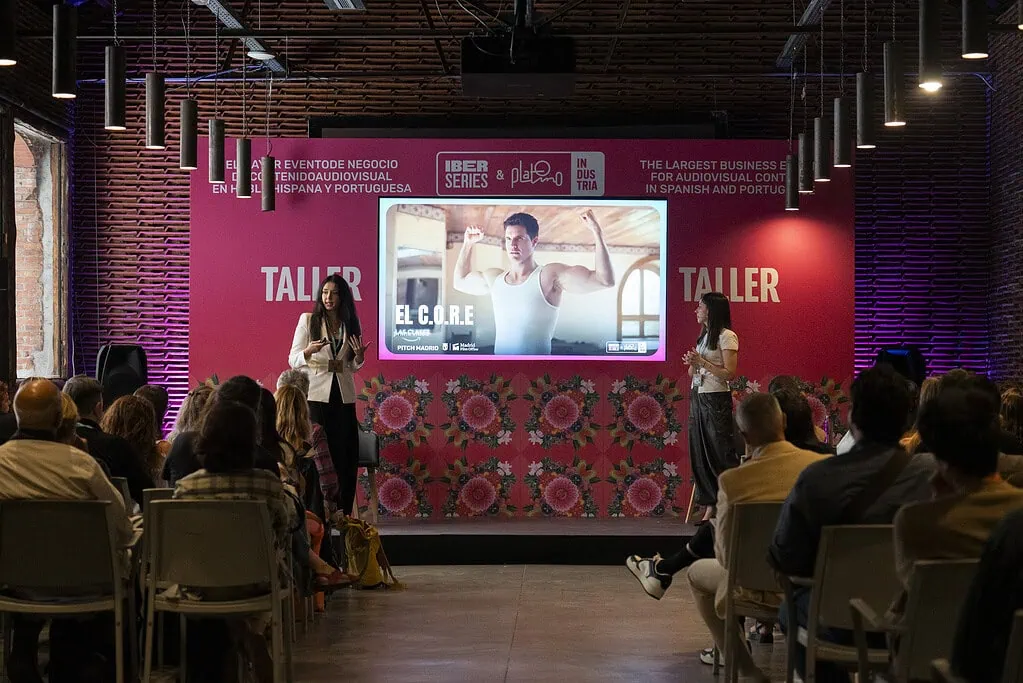
The day also hosted a range of professional and training activities, including Platforms and Production Companies Pitch, the Co-Production and Financing Forum, the Showrunners Workshop and the Clearance Process in an Audiovisual Production workshop, reinforcing spaces for meeting, training and connection among industry professionals. Pitch Madrid, organized by Madrid Film Office, was dedicated to the presentation of audiovisual projects in development linked to the city of Madrid and supported by the Madrid City Council.